
Magnetic Testing of Pressed Powder Sheets Material
Background:
A manufacturing client approached us with a pressed powder sheet material that required detailed magnetic testing before it could be finalized for application use. The material had been produced through a compaction process and was structurally different from conventional laminated electrical steel. Because of its powder-based composition, the client wanted a clear understanding of how it would behave magnetically—particularly in terms of permeability and saturation performance.
At first glance, the testing requirement appeared straightforward. However, once we examined the material, it became clear that standard testing procedures could not be applied directly. The sheet was mechanically fragile, and conventional machine winding used in toroidal magnetic testing posed a real risk of cracking or distorting the sample. Any structural damage would affect the accuracy of the magnetic testing results. To ensure reliable results without compromising sample integrity, we adopted a controlled and customized testing methodology.
Testing Approach:
1.Toroid Magnetic Testing
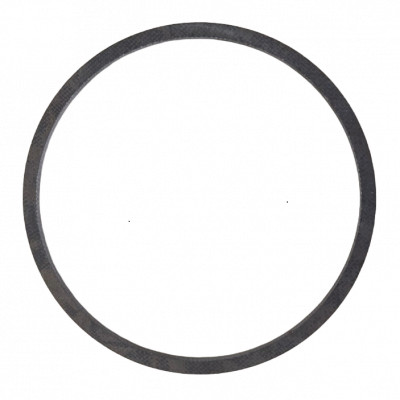
We first prepared a toroidal (ring-shaped) sample from the pressed sheet to perform closed magnetic path testing. Toroidal magnetic testing was selected because it enables accurate permeability measurement by eliminating air-gap effects and ensuring uniform magnetic flux distribution.
Given the delicate nature of the specimen, primary and secondary copper coils were wound manually instead of using conventional machine winding. This precaution minimized mechanical stress on the material. Using this setup, a magnetic field of approximately 500 A/cm was generated to evaluate
permeability behavior and observe the initial magnetization response under controlled excitation.
2.High-Field Electromagnet Testing
While permeability testing under moderate field conditions was important, it was equally necessary to understand the material’s behavior at higher magnetic
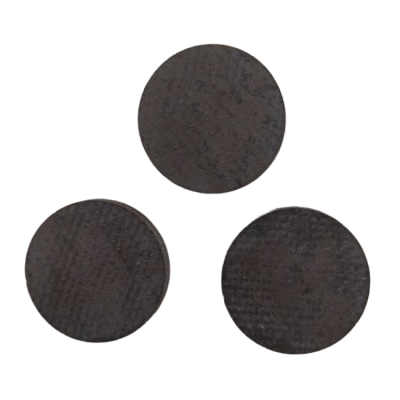
intensities. For this purpose, a second sample in button form was prepared and
tested in an electromagnet setup.
This configuration enabled high-field magnetic testing up to approximately 3000
A/cm. Through this method, we studied magnetization progression and
determined the material’s saturation characteristics under elevated excitation
levels.
Toroidal and high-field testing together provided a complete understanding of the material’s magnetic behavior,
showing stable permeability and controlled saturation without structural damage. The carefully executed 20-day
testing program delivered accurate data, enabling confident validation of the material for its intended
electromagnetic application.