Reliable Evaluation for Reliable Manufacturing
In manufacturing environments, material validation is an ongoing responsibility rather than a single checkpoint. A production-oriented customer required periodic rod testing to verify material integrity before introducing it into their assembly process. Their priority was clear—consistent measurements, transparent reporting, and dependable performance across batches.
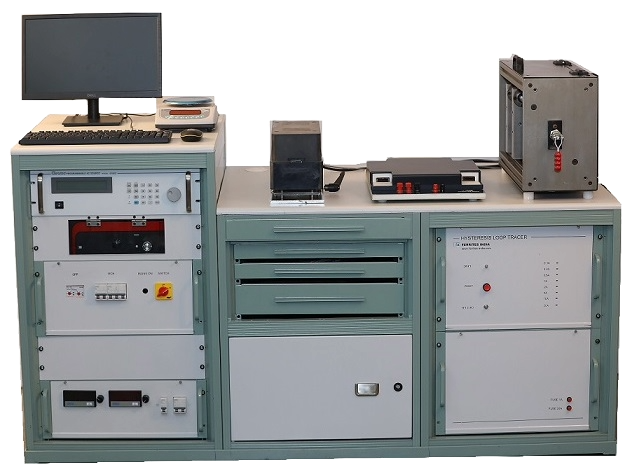
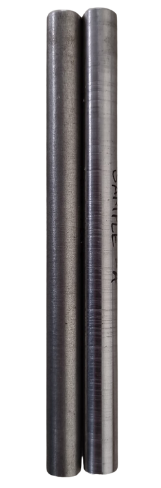
The engagement began with a controlled trial phase. Initial samples were analyzed to assess measurement stability and reporting structure. During this period, focus was placed on calibrated instrumentation, defined operating procedures, and structured documentation. The results confirmed stable system performance and repeatable parameter values, enabling confident material approval. As trust developed, rod testing transitioned from evaluation to routine validation. To safeguard measurement consistency, mutually agreed preparation standards were implemented. Rod geometry was standardized at 8 mm diameter with a controlled length range of 100–150 mm. This dimensional discipline reduced variability and ensured compatibility with the testing setup,
strengthening reliability across cycles.
Operational clarity further streamlined the collaboration. A defined commercial framework allowed direct purchase order issuance and simplified sample dispatch. Currently, two to three samples are
evaluated monthly, demonstrating seamless integration of rod testing into the customer’s internal quality workflow.
Each submission undergoes assessment under controlled conditions using calibrated systems. The disciplined process ensures that recorded variations reflect true material characteristics rather than instrumentation fluctuation. This stability has been central to maintaining confidence in rod testing outcomes over time.
Through consistent execution and clear communication, the collaboration matured into a dependable partnership. Rod testing is now embedded within the customer’s material qualification strategy, supporting uninterrupted production planning.
This experience reinforced an essential insight: precision, process discipline, and transparency form the foundation of long-term trust. When structured rod testing is supported by operational consistency, it becomes more than validation—it becomes a stable pillar of quality assurance.